With Humility

For many years, I have struggled with the necessity of focusing on outward appearance. I take it to heart when I hear the words, “The internal, and not the external qualifications of a man, are what Masonry regards.” If that is true, and I believe deeply that it is, then why should I worry about whether I am wearing a suit or jeans? Does it matter if I keep my shoes clean and my clothes ironed? Overweight, in shape, or somewhere in the middle – who am I to judge another’s outward appearance? In truth, it’s a tension between the ideal and how the world functions.

This is a tough subject indeed. Like it or not, the ideal, and functional concerns must find themselves in balance to achieve our earthly aspirations, and to help those around us. I will be the first to admit that I have a way to go here. Still, I thought I would share some observations.

Each day we present ourselves to the world. Each interaction begins with some kind of impression of who we are. As hard as that may be to admit, it is part of human nature. Yes, how we conduct ourselves and what is in our hearts is most important. But it is foolish to think we can completely avoid how others perceive us, or demand that every person look past every outward signal and see only the internal man.

If we do not take care of ourselves, our clothes, or the way we present ourselves, it can create one more barrier between who we are and what others are able to receive from us. I believe this is one reason my grandpa asked me long ago to always keep my shoes clean and polished. That said, I know it was not only about first impressions. He lived through the Great Depression and understood the value of taking care of things.
When items become scarce, we tend to understand their value in a deeper way. During those times, many went without basic necessities, and people learned to care for what they had. Too often, it is not until something fails, becomes scarce, or is lost that we realize how much we have under appreciated it. For a number of reasons, I will leave you to reflect on this because it seems strangely relevant today. Remember that many do not have access to what they need. If we find them in that condition, it is our responsibility to help them to the best of our ability without putting ourselves in harm’s way.

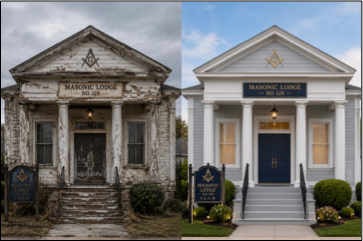
With that framing, I think we should understand that the effort we put into something transmits a message about ourselves. Getting past a first impression can be an uphill battle. I am certain each of us puts sincere effort into the endeavors of our lives, but if we want to speak about self-improvement, and if we want to seek to perfect ourselves, then we must also live and demonstrate those ideals in visible ways. Credibility can be weakened when that first impression calls our care into question, right or wrong. Our outward appearance communicates a message about who we are, the effort we are willing to apply, and the honor we show to those with whom we interact. The same is true about the memory work we perform, and the condition of our buildings.

My friend Dirk Hughes from the Michigan Masonic Museum and Library brings up good points about traditions: https://www.youtube.com/shorts/EGXS11MMQr8. He also mentions the importance of “dressing up”. Our work and traditions should remind us that we are participating in something special.
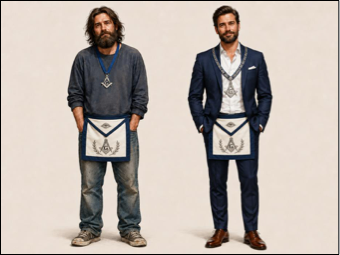
Recently, I found myself interviewing for new jobs. For years, I had kept a very long beard and often grew my hair out. There were a number of reasons for this, including the motorcycle culture I have grown to love. It had become part of my identity.

I also knew it conveyed a certain message; one that could make it more difficult to get a job. Is that right? I do not know. What I do know is that when I got a haircut, and trimmed my beard, many people I care about came up to me and told me how good I looked. That was a wake-up call. It reminded me that having enough pride and care in my appearance, and in the way I carry myself, affects how others perceive me. When my wife said I looked good, that was enough for me. Since then, I have been making time for regular haircuts and beard trimming. Moreover, recently, I saw my reflection in a door window while I was in my motorcycle attire. I must say: though I did not want to admit it, I looked better this way. More meticulous. More like a man who cares for himself, which makes it easier for others to believe the truth that I care for them too.

We should remember this as we groom ourselves, decide what clothes to wear, and care for the outward appearance of our lodges. We should remember the impression that obvious effort gives to others, the confidence that can come with it, and the way it helps us communicate what we value. Should it be that way? I do not know. But functionally, I can tell you from experience that it matters. Mr. Rogers once said that his biggest fear was that his ability to help others would one day be taken away. In a similar fashion, we should fear the day when the blessings and power of Masonry become irrelevant or are lowered beneath what they were intended to be. Cheapened into flash instead of substance. I am asking us to consider appearances, effort, and the messages they convey so that we do not lose the ability to work on truly important things, and so that we do not lose the ability to positively impact the next generations.

In closing, just because something is of the utmost importance: our heart, our character, and the way we conduct ourselves with others, it does not nullify the importance of other things. If you take nothing else from this reflection, I hope you will consider the effort you put into yourself because I want you to care for yourself as much as I care for you. I hope you will consider how we present ourselves to others so that we can share with them the treasure we have been blessed to receive.

I hope that you will consider these words, and that you will travel well, my Brothers.
Continuing to Explore the Trowel

Summer is finally underway, and I hope each of you finds time to enjoy the outdoors and our beautiful weather.   For those whose lodges are dark, there are several ways to continue supporting our gentle craft – commonly including the Shrine and/or the Widows Sons.  

Another activity that may interest you is the Masonic Camp (www.masoniccamp.com).  The camp is an opportunity to enjoy the company of Brothers and learn from each other in the beauty of Northern Minnesota.  We have several great speakers lined up and hope you will join us August 28-30.  

We also have dispensation from our Grand Master MWB Shawn Carrick to perform a first degree at the camp.  If you have a candidate, consider this special opportunity for an outdoor degree.  To learn more, please visit the website, or feel free to reach out to me at.

With that, we will continue to explore the Trowel, and the words of our own MWB Tom Hendrickson.  Below is the continuation of last month’s eMason article, and Tom’s thoughts on the trowel.  I hope you enjoy it.

Until our paths next cross, travel well.


The Trowel: Building with Brotherly Love (Part Two)

By MWB Tom Hendrickson

The Trowel Beyond the Lodge

The lessons of the Trowel are not meant to stay inside the Lodge. Just as a wall is built brick by brick, the world around us is shaped moment by moment through the way we treat one another. Every interaction becomes an opportunity to spread the cement of Brotherly Love and affection.

Outside the Lodge, we meet people who do not share our background, our beliefs, or our experiences. We encounter disagreements, misunderstandings, and the rough edges of daily life. These are the places where the Trowel matters most. It reminds us that our task is not to judge the stones, but to bind them. Not to widen the cracks, but to mend them.

 The Trowel calls us to be builders in a world that often prefers to tear down. It asks us to look for ways to strengthen relationships rather than strain them, to offer patience where others offer impatience, and to extend kindness where it is least expected. These small acts of care are the mortar that holds families together, supports friendships, and builds communities that can withstand hardship.

Just as my father taught me that a wall depends on the care given to each brick, the Trowel teaches that society depends on the care we give to each person. A generous word, a thoughtful gesture, a willingness to listen, these are the motions of the Trowel in everyday life. They bind us together in ways that are stronger than we often realize.

The world will always have its fractures. But the Trowel reminds us that we are not powerless in the face of them. Freemasons are builders, not destroyers, men who strengthen what is weak, mend what is broken, and bind together what might otherwise fall apart.

The Call of the Trowel

The Trowel is not a tool of force or dominance. It does not cut, strike, or shape. Its purpose is gentler, but no less powerful. It binds. It heals. It brings together what might otherwise remain separate. In the hands of an operative mason, it unites bricks into a wall. In the hands of a Master Mason, it unites people into a community.

The world gives us many opportunities to divide ourselves, to harden our opinions, or to let small cracks widen into lasting fractures. The Trowel calls us to a different kind of work, the work of connection. It reminds us that the strength of any structure, whether a wall or a Lodge or a friendship, depends on the care we give to each bond.

 Every day offers us a chance to spread a little more of that cement, a moment of patience, a gesture of kindness, a willingness to listen, a choice to mend rather than break. These small acts may seem insignificant, but they are the quiet motions that hold our world together.

In the end, the Trowel teaches a simple but profound truth. Freemasons are builders, not destroyers. We are called to strengthen what is weak, to repair what is damaged, and to bind together what might otherwise fall apart. The wall we build is made of relationships, and the bridge we build is made of Brotherly Love. The work is never finished.

The Trowel reminds us that every bond matters, every connection counts, and every act of Brotherly Love helps build a world that is a little more stable, a little more compassionate, and a little more whole.

Exploring the Trowel

As the spring degree cycles come to a close, I suspect many lodges are spending time reflecting on the symbols and tools of our Craft. With my travels to various educational conferences between winter and now, I have also been reminded just how blessed I am by the bonds and friendships we share along the way.

Continuing with our series of contributions from fellow authors, I am pleased to share some reflections on the trowel from MWB Tom Hendrickson. I believe there are many thoughtful observations and insights contained within his thoughts on the trowel, so I will be sharing them in two parts. I hope you enjoy this month’s installment and will return to next month’s eMason for the conclusion.

I look forward to visiting with many of you soon, but until then, travel well, my Brothers.


The Trowel: Building with Brotherly Love

By MWB Tom Hendrickson

A Lesson in Brick and Mortar

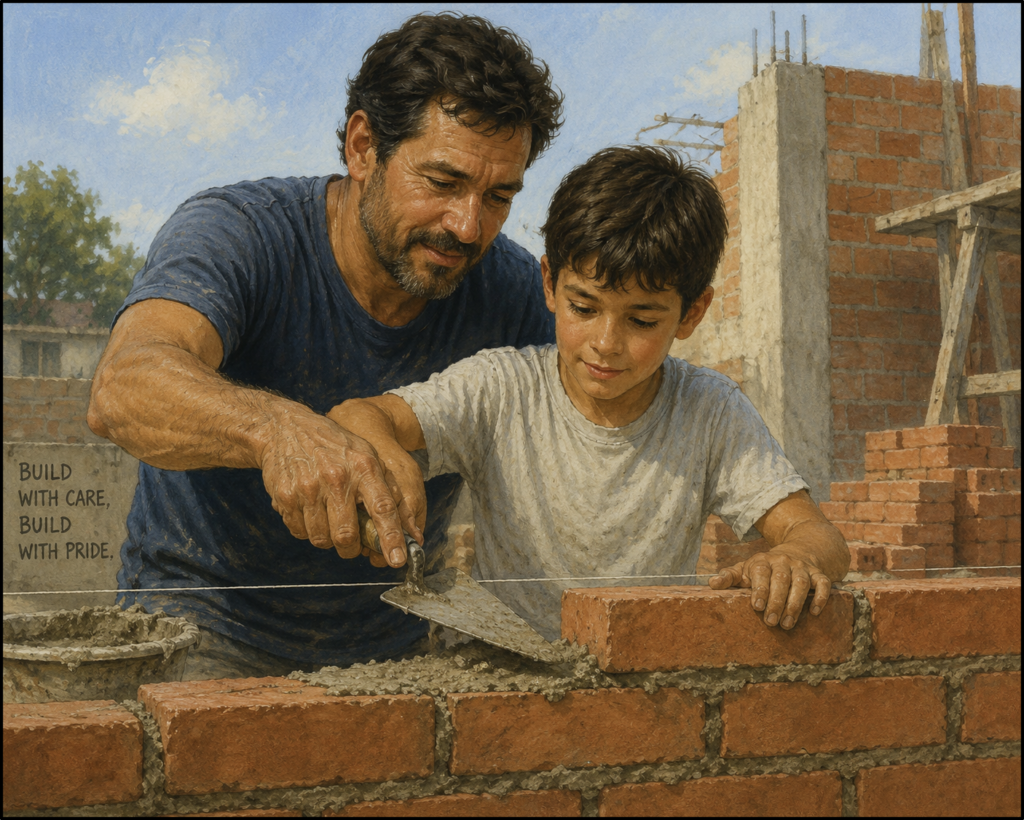
One summer, my father asked me to help him on a job he was working. He told me I would be his tender for the day—carrying bricks from the truck to the spot where he was building a wall. It was hot, heavy work, and by midday my arms and shoulders were feeling every step of it. The sun was high, the air was thick, and the pile of bricks never seemed to get any smaller.

Later in the afternoon, he looked over at me and asked if I wanted to try my hand at laying a brick. Before I could think too much about it, he placed the Trowel in my hand. That was the first time I ever held one with any real purpose.

 He showed me how each brick mattered in the wall, how every single one had to be set level so the whole structure would stand straight and strong. The cement was what held it all together, binding loose bricks into a unified whole. My job, he said, was to spread a generous, even layer—not too much and not too little—so the brick would settle firmly into place.

Sometimes the Trowel moved smoothly, almost effortlessly. Other times it took a little work to get the right amount of cement, the right angle, the right touch. But every brick, every motion of the Trowel, contributed to something larger than itself. A wall is never built all at once. It is built one careful, intentional brick at a time.

I did not know it then, but that afternoon taught me more than how to lay a brick. It taught me what it means to build, to bind, and to bring things together. It taught me that strength comes from unity, and unity comes from the care we put into each connection. Years later, when I learned the Masonic meaning of the Trowel, I realized my father had already given me the beginning of that instruction—not in words, but in work.

The Trowel Inside the Lodge

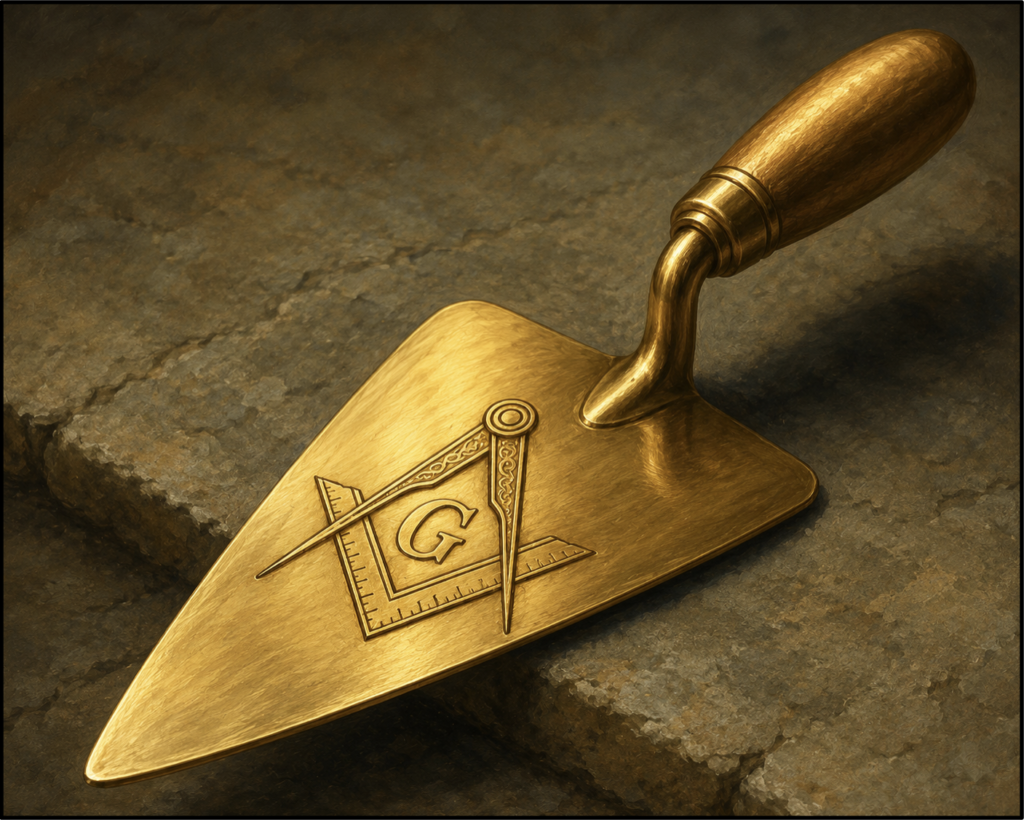
In Freemasonry, the Trowel is one of the working tools of the Master Mason Degree. Operative masons use it to spread mortar and bind stones together, turning individual bricks into a unified, enduring structure. Speculative Masons take that same practical image and apply it to human behavior and character.

Just as mortar holds a wall together, the Trowel symbolizes the forces that bind people into a community. It reminds us that unity does not happen by accident. It is built intentionally through the way we treat one another.

Symbolically, the Trowel teaches:

Brotherly Love — spreading the cement that unites members into a supportive, caring fellowship.

Unity — binding individuals together despite differences in background, opinion, or experience.

Peace and Harmony — encouraging kindness, cooperation, and mutual respect, smoothing the rough edges that cause friction.

Service to Others — using our actions to strengthen society rather than divide it.

A familiar Masonic explanation puts it plainly: the Trowel spreads the cement of Brotherly Love and affection, joining people into a moral and ethical whole.

Inside the Lodge, this is more than a poetic phrase. It is a charge. The Trowel reminds Master Masons that their work is not only to build themselves, but to help build harmony among others. It is the tool that prevents separation, heals division, and strengthens the bonds that make a Lodge more than a room full of individuals.

The Work of Building Unity

If the Trowel teaches us anything, it is that unity does not happen on its own. A wall does not rise because the bricks wish to be together. It rises because someone takes the time to place each brick with care, spread the mortar evenly, and make sure the bond is strong. The same is true of human relationships.

Today’s world makes this work harder than ever. People are quick to divide themselves into groups, to defend their opinions, to assume the worst of others before they have heard the best. Social media rewards outrage more than understanding. News cycles thrive on conflict. Even small disagreements can turn into wide cracks if no one steps forward to mend them.

This is where the Trowel becomes more than a symbol. It becomes a discipline.

Some days the work goes smoothly. Conversations flow, people cooperate, and harmony seems easy. Other days, the Trowel drags. Misunderstandings pile up. Tempers flare. The mortar feels too thick or too thin, and nothing seems to set right.

But the lesson is the same: unity is built one careful act at a time.

A kind word. A patient response. A willingness to listen. A choice to mend rather than widen a crack.

These are the small motions of the Trowel in daily life. They may not seem like much in the moment, but they bind people together in ways that last.

Connect With Other Brethren – Borrowed from Ohio

As mentioned in one of my previous articles, one of my biggest Masonic regrets is waiting so long to travel. It now seems fitting to share the third and final part of the article from the Grand Lodge of Ohio, shared by my friend RWB Chad Kopenski. I’m sharing this just after attending our Annual Communication and one week before heading to the Midwest Conference on Masonic Education (http://mcme1949.org). This is the very place where I first met Chad.

If you’re not yet traveling, visiting other lodges, or attending conferences, I’d strongly encourage you to start. The friendships and bonds formed along the way are truly priceless, and I say that from experience.

I’m always happy to share ideas and I’d welcome the opportunity to visit your lodge as well. With that, I’ll leave you with the final excerpt from “Living Masonically Outside of Lodge” from the Grand Lodge of Ohio. I hope you enjoy it.

Until we next cross paths, travel well my Brothers.

—-

Freemasonry is a personal journey towards becoming a better father, husband, friend, citizen and man supported by others at different points on that same journey. The importance of the Fraternal Connection cannot be understated and, for many years, the focal point of that connection was the individual Lodge. We now live in a world where there are many ways to connect with Brethren from different cities, jurisdictions and countries. You are an individual Mason, but you are part of a Brotherhood that spans the globe and spans the centuries. A perfect ashlar’s true beauty is only discovered when it is used in concert with others, together creating something beautiful, useful, and steadfast.

Some Masons find that regularly attending Lodge is not a good fit with the other demands on their time and efforts. These Masons usually find that the best way for them to connect with their Brethren is through activities that are outside the regular Lodge meeting. Participating in a community event like Special Olympics or a local fair, attending special Masonic events like Table Lodge or the Annual Inspection, taking a specific part on the Craft Team for one degree or another, or even just meeting with Brethren for a meal or an activity separate from Lodge altogether are all wonderful ways to connect with Brethren. Masonic Brotherhood was never limited to the confines of the Lodge Room and to the monthly Stated Meeting, nor should it ever be.

Because of the character, values, and skills of the Brethren, every Masonic Lodge does provide a unique experience. For some, a successful Lodge experience centers around education and discussion, for others it centers on the meal and the Brethren talking for hours, still others focus on Ritual Excellence, others focus on community service; Brethren are encouraged to visit other Lodges and discover the unique experiences available.

We live in a world with many resources for the digital or online Mason. Besides Facebook and Grand Lodge websites, you can find Masonic podcasts, Masonic blogs, and Masonic online communities where Brethren can connect, share, and discuss. These online resources can often supplement the experience of Lodge or meeting with other Brethren in- person, but should never completely replace that experience.

When connecting with Brethren, especially online, it is well to keep in mind the Ancient Charges of our Order, particularly the section regarding behavior toward a strange Brother.

You are cautiously to examine him, in such a method as prudence shall direct you, that you may not be imposed upon by an ignorant false pretender, whom you are to reject with contempt and derision, and beware of giving him any hints of knowledge. But if you discover him to be a true and genuine Brother, you are to respect him accordingly; and if he is in want, you must relieve him if you can, or else direct him how he may be relieved. You must employ him some days, or else recommend him to be employed. But you are not charged to do beyond your ability, only to prefer a poor Brother, that is a good man and true, before any other poor people in the same circumstances.

Finally, all these Charges you are to observe, and also those that shall be communicated to you in another way; cultivating Brotherly Love, the foundation and capstone, the cement and glory of this ancient Fraternity, avoiding all wrangling and quarreling, all slander and backbiting, nor permitting others to slander any honest Brother, but defending his character, and doing him all good offices, as far as is consistent with your honor and safety, and no farther.

We live in a global society. You will encounter Masons of all stripes as well as cowans and pretenders in your travels. Therefore, do not be too eager to reveal specifics of Ohio Ritual, Masonic Code, or Lodge business. Recognize that Masonry is a big tent and that people come to it for many different reasons seeking different experiences and have very different opinions. Be careful to avoid letting productive discussions devolve into rancorous arguments. In short, remember the cardinal virtues of Temperance, Prudence, Fortitude, and Justice.

Because connecting with other Masons is crucial to living a Masonic life, Brethren are encouraged to find the right fit for themselves. It may be that being involved only in activities outside the Lodge is the best fit for a Brother due to family and work obligations. It may be that the Traditional Observance Lodge in the next county or the Lodge in their District that is made of mostly veterans is the best fit for a Brother and what he values. It may be that an online community is the best fit for a Brother to use a particular lens to view Masonry and connect with informed Brethren. In general, we find that Masons will drive 3 hours one way to a Lodge or activity that is the right fit when they wouldn’t cross the street for the wrong one.

Conclusion

Freemasonry is a personal journey towards becoming a better father, husband, friend, citizen and man supported by other men at different points on the same journey. Brethren have always been charged with taking the lessons learned in Lodge and practicing them in their daily lives. In our modern society, it is more important than ever that Masons endeavor to live their Masonic values and put them into action, educate themselves and reflect on topics relevant to a well-spent life, connect with other Brethren and live a life that informs, influences, and inspires others.

Educating Yourself – Borrowed from Ohio

This content was provided by RWB Chad Kopenski of Ohio and originates from the 2016 Ohio Grand Lodge Membership Committee. It forms part of a larger document that I will share as a series. The information presented in this installment is valuable and intended to encourage reflection regarding various aspects of Masonic Education and offering suggestions for exploration.

Enjoy, and until we next meet:  travel well my Brothers.

Educate Yourself

Freemasonry is a big tent, and people come to it for many different reasons seeking different experiences. Because of this, there are many different lenses to use when looking at Freemasonry. It is worthwhile to look at Freemasonry through different lenses or viewpoints to increase our knowledge and understanding. There are a wealth of print, television, movie, and online resources for the modern Mason and most of them can be categorized as presenting from one of the following viewpoints:

  • Freemasonry 101-These resources seek to give the basic information about the history, nature, and specifics of Freemasonry such as Brother Christopher Hodapp’s Freemasons for Dummies.
  • Moral, Ethical, and Spiritual Inspiration-These resources help explain, reinforce, or invite reflection upon systems of thought and belief such as Volumes of Sacred Law or Joseph Campbell’s ‘Power of Myth.’
  • Foundational Documents-These resources are examples or explorations of the original documents upon which Speculative Freemasonry is based, such as Brother James Anderson’s Constitutions of 1723 or Brother Thomas Smith Webb’s The Freemason’s Monitor: Or Illustrations of Masonry.
  • Masonic History-These resources explore the history of the institution, the institution’s role in historical events, and/or the lives of influential and/or famous Masons.
  • Masonry Explained-These resources seek to explain Masonic symbols, shed more light on aspects of the degrees, or increase understanding on the lessons of the different degrees such as Brother Allen Roberts’ The Craft and Its Symbols.
  • Esoteric Masonry-These resources explore the less mainstream areas of Masonry, often including aspects of spiritualism, mysticism, hermeticism, and mythology such as Brother W. Kirk MacNulty’s Freemasonry: A Journey Through Ritual and Symbol..
  • Anti-Masonry-These resources explore the religious, social, and historical objections to Freemasonry, offering evidence and information to respond to those objections such as Is It True What They Say About Freemasonry? by Brothers Arturo de Hoyos and S. Brent Morris.
  • Masonic Conspiracy Theories-These resources, usually created by non-Masons, seek to implicate Freemasonry in explaining mysteries such as the Whitechapel Murders or the Oak Island Treasure or seek to show Freemasonry as a clandestine global authority that directs everything from the fates of nations to the winners of entertainment awards.
  • Masonic Fiction-These resources utilize Freemasonry as part of the story, such as Dan Brown’s ‘The Lost Symbol,’ Umberto Eco’s ‘Foucault’s Pendulum,’ or Rudyard Kipling’s ‘The Man Who Would Be King.’
  • Masonic Poetry-These resources feature poems by Masons or about Masonry such as MWB Rob Morris’ ‘Poetry of Freemasonry,’ or works by WB Rudyard Kipling, WB Robert Burns, WB Jason Eddy and others.
  • Masonic Leadership-These resources explore ways of becoming a leader, being an agent of change within a Lodge, or call for a re-examination of Masonry such as PGM James Easterling’s ‘The Successful Lodge: Best Practices in Freemasonry by 70 Well-Traveled Brethren,’ RWB Dan Hrinko’s ‘The Craft-Driven Lodge,’ or Brother Andrew Hammer’s ‘Observing the Craft.’

 This list is not exhaustive and any resources listed should be considered a representative example and not construed as being an endorsement. When utilizing any resources, Masons should keep a healthy level of skepticism and utilize their powers of investigating and reasoning to evaluate the source, ideas, and viewpoint. We live in a society awash in information, but not all of it is good, valid or useful.

As Masons view Freemasonry through different lenses, some find that they have a particular interest in one view over another; they may also find gaps in their own knowledge. As Masons, we recognize that there is always more to know; therefore, keep interested in your own development as a man and Mason. There are many ways to develop: a study of one of the seven liberal arts and sciences, perfecting your skills as a craftsman, enhancing your abilities as a father and husband, or taking the time to contemplate and appreciate the great works of Creation can be just as valuable. Some Masons will tell you that they learned more about Masonry taking their daughter fishing than they ever did reading a book or going to a website.

Education can be difficult on your own, and the inquisitive Mason will find that there are many like-minded Masons readily available. For centuries, the Masonic Lodge has been the place for men to share their knowledge, to discuss challenging ideas with peers, and come away with their own knowledge increased and thinking clarified. As the old adage goes: “If you are uninformed, surround yourself with informed people; if you are informed, surround yourself with informed people who are not afraid to respectfully disagree with you when necessary and explain why.” As you develop, bring what you have learned back to your Lodge and your other communities. Apply and share what you have learned. A perfect ashlar on a shelf is nice to look at; but its true beauty is discovered once it is put to use.

Reflections from Yesterday

With travels, and us working through the month of February, my mind begins to reflect on
the bonds that we build together. Researching Wikipedia, I see that Valentine’s Day is
also known as the “Feast of Saint Valentine”. I find this interesting as I consider other
feasts that we recognize and celebrate as Masons. Many have recently participated in
local Remembrance and Renewal dinners with their Scottish Rite Valleys. Put together, I
am reminded of the importance to tell those around us what they mean to us while there is
still time.


Tomorrow is not promised, and this is one of life’s great tragedies (especially if thought is
constrained to the here and now). I hope you will make good use of your time and build
strong and meaningful relationships because together we accomplish far more than we
can do alone. I have not always been the best at understanding this, but I have been
blessed with great teachers that I continue to learn from.
The lore and the legends that surround Saint Valentine tell the story of a man imprisoned
for tending to persecuted Christians. One such legend shares Saint Valentine restored
the sight of a young blind woman – a daughter of one of his jailers. It would be easy to
hold a grudge in these less than optimal conditions. The legend continues to share a
farewell letter he wrote to the young lady before his execution to which he closed with,
“Your Valentine”. Interestingly, there is additional information in the Wikipedia article
referring to Saint Valentine as being the patron saint of good health, beekeepers and of
pilgrims.


Valentine’s Day later became a symbol of expressing love and appreciation for those that
are around us. The more cynical among us, may claim that Valentine’s Day is a creation
to sell greeting cards and candy. … But I’d like you to think about something else.
Speaking personally, delivering flowers is one of my favorite Valentine’s pastimes – and
watching the smiles that naturally surface on recipients’ faces. Delivering flowers with my
local OES chapter is one of my favorite yearly activities and something I share with my
wife.


From many sources, the importance of love in our current condition is explained. I
stumbled across a good article from West Wales Freemasons that further explores the
meaning of Valentine’s Day, and reflects on the meaning of the world love and its potential
overuse in modern vernacular. In the article, there are some good reflections on Brotherly
Love. The thoughts can be summed up nicely in the words of our own Minnesota Manual,
“By the exercise of BROTHERLY LOVE, we are taught to regard the whole human species
as one family, the high and low, the rich and poor; who, as created by one Almighty
Parent, and inhabitants of the same planet, are to aid, support and protect each other. “
While visiting Wayzata Lodge, I heard about their lantern. I can envision how it used to
shine in front of the lake. It makes my heart full to think about the work that symbolized.
Traveling through life is a difficult thing. Our institution is an outpost of faith, hope and
charity. A key function of family is to love enough to help its members through the difficult
times. Our relationship with our fellow human beings is a responsibility and a privilege that
should not be overlooked or taken lightly.


In closing, with a virtual hug and sweetheart candy reading, “Brotherly Love”, I hope your
day is treating you well and that you had a very happy Valentines Day. I hope you will take
a time-out from the hustle and bustle of the daily emergencies and spend quality time with those around you. It goes without saying that if you ever need an ear, I am here with two
to offer.


Masonry is a Mirror: Seven Principles for Inner and Outer

The following paper came across my desk, and I was blown away by it.  There are a lot of key concepts that I think we can all reflect on in our own personal works, and in our lodges.  This left me thinking, and I think that is a key characteristic of a good paper.  It is longer than many of the items I run in the eMason, but I thought it was so good and timely that I would be doing you and Masonry a disservice by not sharing it.  It has a lot of advice on how we carry ourselves, and how we choose to view our circumstances and our world.

This comes from my good friend Russell Winbush – the sitting Worshipful Master of Rochester Lodge #21.  I hope you enjoy it.

Masonry is a Mirror: Seven Principles for Inner and Outer

 By WB Russell Winbush

Transformation

Reflections on Reality Transurfing and the Ancient Craft:  In the esoteric work “Reality Transurfing,” author Vadim Zeland presents a profound concept: the world operates as a dual mirror, reflecting back to us not what we think we project, but rather our deepest relationship to existence itself. This mirror principle, with its seven fundamental laws, offers remarkable parallels to our ancient Masonic understanding of inner work manifesting as outer transformation.

The First Mirror Principle: The World Reflects Your Relationship to It

Zeland’s first principle states that “the world is like a mirror that reflects your relationship to it.” In Masonic terms, this means the Lodge, the Craft, and our Masonic journey reflect not our desires for transformation, but our actual relationship to the work itself.

A Brother who approaches Masonry with cynicism will find his Lodge experience confirming exactly that perception—disengagement and meaningless ceremony. Conversely, a Brother who approaches the Craft with reverence discovers profound teachings and genuine fellowship. The ritual itself is neutral; what varies is the relationship each candidate brings to the experience.

The Second Mirror Principle: Unity of Heart and Mind

The second principle reveals that “reflection is formed in the unity of heart and mind.” When intellect and emotion align, intention becomes manifest.

 This illuminates why Masonic transformation requires both intellectual study and heartfelt commitment.  A Brother may intellectually understand the symbolism of the Rough and Perfect Ashlar, but until his heart genuinely desires character refinement, no real transformation occurs. The ancient requirement that a candidate come to Masonry “of his own free will and accord” ensures this unity exists from the beginning.

The Third Mirror Principle: The Delay Principle

 Perhaps most crucial for Masonic work is the third principle: “there is a delay in the reaction of the dual mirror.” Material realization of inner work takes time, often much longer than our impatient minds expect.

This explains the traditional emphasis on degrees as progressive stages rather than immediate enlightenment. The tools and symbols we receive require patient, consistent application before their transformative power becomes evident. Many brethren become discouraged when months of Masonic study seem to produce little tangible change—the third mirror principle reminds us this delay is natural and necessary.

Zeland suggests creating an “amalgam”—a fundamental attitude that colors all experience. For Masons, this might be: “The Craft is perfecting me according to divine wisdom.”

The Fourth Mirror Principle: Content Over Orientation

The fourth principle states that “the mirror cites the content of the relationship but ignores its orientation.” The mirror reflects what we focus on, regardless of whether we want it or want to avoid it.

Brethren who constantly complain about Lodge politics or declining membership unwittingly program more of the same into their Masonic experience. Instead, successful Masonic practice requires focusing attention on what we want to develop: stronger fellowship, deeper understanding, meaningful ritual, charitable action.

The Fifth Mirror Principle: Image, Not Reflection

The fifth principle advises: “switch your attention from the reflection to the image.” Instead of trying to fix external Masonic problems through direct action alone, we must first work on the internal image—our own understanding and practice.

A Brother seeking to revitalize his Lodge accomplishes more by deepening his own Masonic understanding than by criticizing others’ lack thereof. His genuine transformation creates a new reflection that naturally inspires similar changes in his brethren.

The Sixth and Seventh Mirrors Principles: Release and Reframe

The sixth principle teaches us to “release your grip and allow the world to move,” while the seventh instructs us to “embrace any reflection as positive.”

For Masons, this means releasing attachment to specific outcomes while maintaining faith in overall improvement. When unexpected challenges arise—difficult personalities, financial pressures, ritual mistakes—we can choose to view these as lessons needed for further development.

Practical Application:

Lodge Preparation: Before Lodge meetings, consciously set your internal image. Rather than dreading potential conflicts, envision yourself contributing positively

The Conscious Response: When challenges arise, ask: “What is this reflecting about my current internal state?” Use it for self-improvement rather than criticism.

The Amalgam Formula: Develop your personal Masonic amalgam:

– “Every Lodge experience teaches me something valuable”

– “My Masonic journey unfolds perfectly according to divine timing”

– “The Craft continuously reveals new depths of wisdom”

Focus Discipline: When Lodge problems capture your attention, consciously redirect thoughts to your Masonic ideals. What you focus on consistently will be reflected back as your experienced reality.

The Greater Implication

If Masonry truly functions as a mirror, then the current state of the Craft worldwide reflects the collective consciousness of its members. This empowers rather than discourages, because it means revitalization lies entirely within our control—through individual brothers transforming their own understanding and practice.

As each Mason polishes his own internal rough ashlar, the mirror of the Craft inevitably reflects back greater light, wisdom, and fellowship. The divine light we seek isn’t separate from us—it’s already present, waiting to be reflected through our own purified consciousness.

Like the Master Craftsmen who knew their cathedral’s quality reflected both technical skill and spiritual development, we must understand that our Lodges, degrees, and fellowship mirror exactly what we bring to the sacred work.

The world—and the Craft—truly is a mirror. The question becomes: what image are we consciously choosing to reflect?  May we each work diligently to perfect ourselves as living stones in the spiritual temple, remembering always that the light we seek in the East is the same light that shines from within our own transformed hearts.

Seek and You Shall Find

“Knock, and it shall be opened unto you.”  I have heard those words somewhere along the line, as I suspect we all have.  Recently, a Brother and I were speaking to a new petitioner, and I found myself sharing something that I know to be true:  I am not the same man who first knocked at the door of this lodge some 20 years ago.  

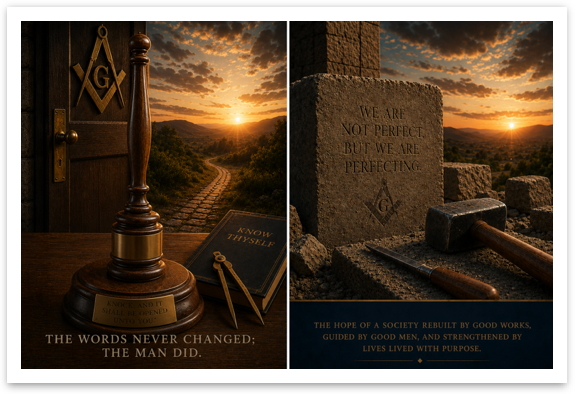
At different points in my journey, I would have reflected on those words in very different ways.  As a young man first knocking at the door of the lodge and seeking light, they likely carried one meaning—an invitation of discovery, growth, and perhaps to learn something he did not yet fully understand.  Years later, those same words took on a different weight when they were engraved upon the gavel my wife gifted me, and as I was elevated by my Brothers.  With it, I was given the honor of presiding in the East and caring for Rochester Lodge No. 21.  In that season, the words spoke of leadership, responsibility, and service.

My conversation with the new petitioner, and one of my original mentors brought those same words back to me once again.  And now…?  Now they carry yet another meaning.  Why?  The words never changed; the man did.  

 Each of us is a story unfolding upon the level of time.  Perhaps that is why great works of art continue to resonate across generations – reflecting both the comedies and the tragedies that shape our human experience.  As a friend once reminded me, pushing through that brings us closer to our creator.  Each of us views life through the lens of our own experiences: with all the beauty, scars, strengths, and biases that come with them.  

One of the great gifts that the lodge experience offers us is a place to wrestle with those truths. It challenges us to better understand men, to appreciate the importance of the journey, to think critically, and perhaps most importantly… to discover our own potential as we get to “know thyself”.  As we travel that path, we must be willing to ask a difficult question: Are we seeing the world as it truly is… or only as it appears colored by our experience, ego, and bias?

To assume we already possess truth and to close ourselves off from growth, correction, or deeper understanding is a danger every man faces. We may think of ourselves as Masters and yet we would be mistaken.  Today, we even have a name for part of that struggle: the Dunning–Kruger effect.  

The principle itself is far older than modern psychology. It appears throughout sacred writings, in the teachings of philosophers, and in the stories of great men who wrestled with the same enduring questions: Who are we? Why are we here? How should we live?  

The more we invest ourselves in the temptations of this life, the more we lose sight of what is truly important.  What difference does making a few more dollars make if we never have the time to enjoy the fruits of our work?

In an age of technology, instant information, endless notifications, and the constant pull of immediate gratification, patience has become a rare discipline. We are being conditioned to react rather than reflect—rewarded by the chemistry of convenience, speed, and stimulation.

And still… I would ask us to remember another way.

An older way.

A proven way.

A meaningful way.

A path that demands reflection, perseverance, humility, and perspective.  Craftsmen, I would ask us to be patient and understand that we will receive the secrets of eternity when the time is right.  A stone shaped too quickly may crack under pressure. A careless strike may chip it in ways that make it useless for the builders’ use.  

As Masons, we carry a tremendous responsibility—not only to the Great Architect of the Universe, but to the men who seek our guidance, our example, and our friendship.  The world and its distractions may have its grip on society, but I believe we have a stronger grip.  We bring hope.  The hope of a society rebuilt by good works, guided by good men, and strengthened by lives lived with purpose and the ability to apply our tools and philosophies to every day of our life, and not just memorized words said sometimes in a lodge performance.

We are here to help each other find patience, to do the work, and have the courage to shape ourselves: fitting ourselves as living stones.  As you do so, travel well my Brothers…

Order from Chaos

It is said that Einstein once said something along the lines of, “In the middle of difficulty lies opportunity.”  It is a concept worth reflecting on – especially in these uncertain times, and an idea that helps us take the hardest and most important step: the first one.  In what seems to be a very chaotic world, how do we transform chaos into order?  Good question.

The first step is to consider goals and determine what is important to us. Identifying priorities and desired direction helps establish guardrails for the path we walk. This process involves examining one’s own roles and objectives, as well as outlining steps to achieve desired outcomes. While this approach is commonly applied at the lodge through exercises like planning annual calendars, officer meetings, or committee work, it also applies to personal development.  One critical error is to create such resources and never re-visit them again, or to only do so infrequently.

At a recent area conference, we discussed mission statements.  It is important to capture the mission of an organization – especially if it helps to center itself.  As famous Apple Evangelist Guy Kowasaki highlights, if you want to be successful as an organization, the organization must make meaning.  For Masons, that could be a lot of things – but perhaps a good start is remembering the promises we have made to the lodge and supporting those around us.  Further, who benefits from a mission? Is it intended solely for communicating who we are to those who seek admission into our lodge, or does it serve another function?

For communicating with others, a Mantra might be more meaningful.  That said, I’d pose that the power behind a mission statement is in recognition of value, and a tool for prioritization.  As a silly example, I might ask myself if it is appropriate for a lodge to invest in an ice cube shop in Alaska.  Does this potential investment support the organization’s mission, and in what ways?  Lodges should discuss opportunities and their mission statement in this way.  That said, organizational effectiveness extends beyond lodge objectives; to contribute meaningfully to a whole, individuals must develop self-awareness and understand their own needs.  Having the discipline to write a personal mission statement and evaluate opportunities regularly is how we find the balance we seek in dividing our time and where we invest it.  Without this practice, it is certain someone else will decide for us and we become victims of chaotic unpredictability.

A few words on saying “no”.  Many want to avoid using that cursed word but do so to their own peril.  Not saying “no” closes doors to other opportunities or can destroy credibility when commitments are not followed through on or are done so in word but not spirit.  Instead, it is important to spend a few minutes each week evaluating our various roles: father, Mason, employee, friend, etc. and striving to apply our lessons to find the appropriate balance between them.  Repeat the planning weekly at the same time to build a new habit.  

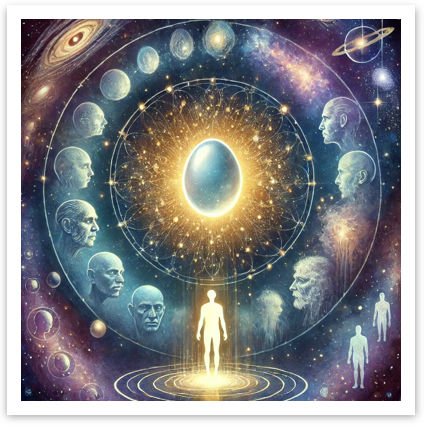
We depend on support from our spouses, friends, family, Brothers, and colleagues. Expanding our focus to society, it’s vital to value relationships and listen openly to others’ ideas. Achieving more together requires effort, patience, acceptance of diverse views, trust in others’ intentions, and the understanding that there are enough resources and opportunities for all.  For a little more perspective, consider reading over Andy Weir’s story of the Egg.  What if it were true – would it change how you interface with the rest of the world?

Relationships and trust take a lot of time to earn, and I believe that is why our progressive lines are multiple year progressions.  If you aren’t friends with those you are serving with, it will be a constant challenge.  Do you check-in from time to time just to make sure those around you are OK?  Do you hang out after lodge, see movies, watch football, play cards, ride motorcycle, or whatever your favorite activities might be?  If not, why not?

The main point is that growth, whether for a lodge or an individual, requires clear intent and ongoing communication. Revisiting intentions and taking regular steps toward goals -even if slowly is essential. Avoid stress by fostering relationships and making time for yourself, family, and fellow members. Balance your schedule to support continuous improvement both within and outside the lodge.  How do you turn chaos into order?  The answer is with friends, intention and tenacity.

With that, travel well my Brothers.

Let There Be Light

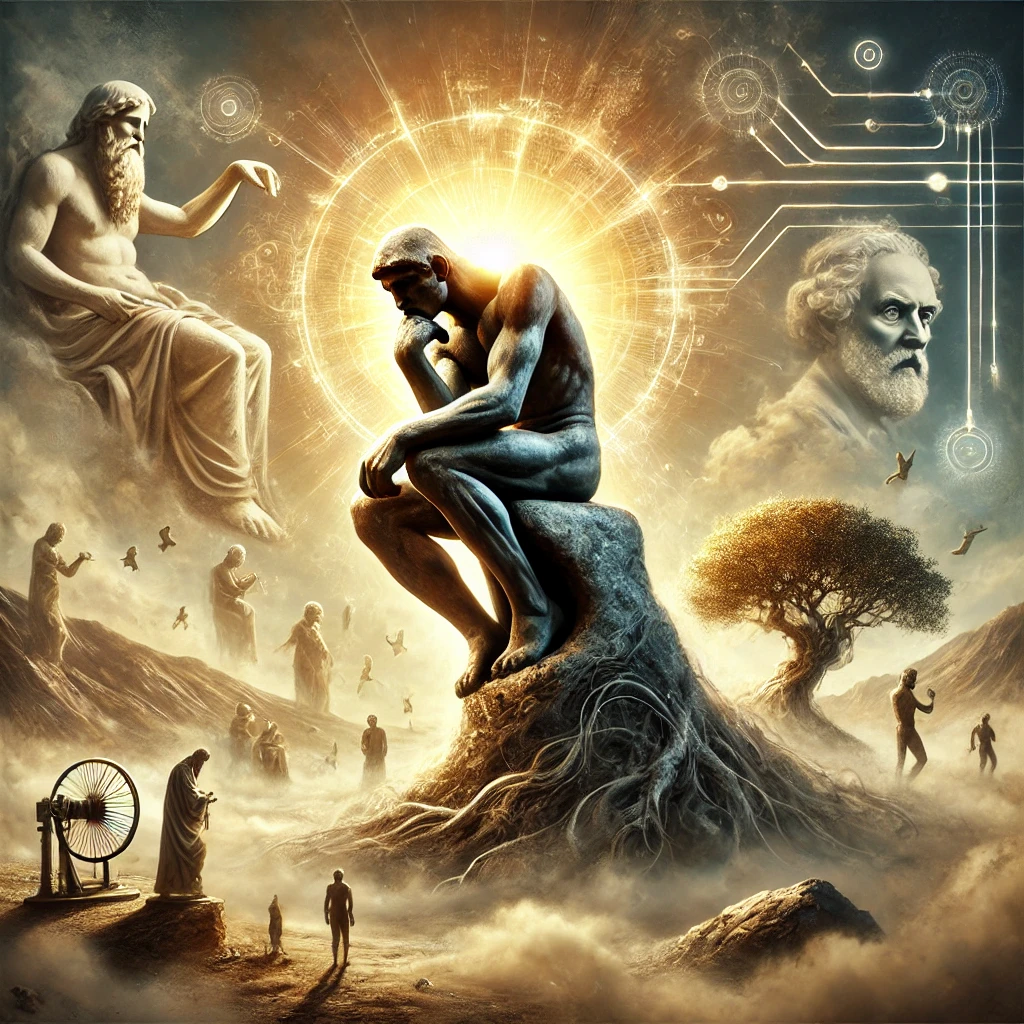
 Throughout history, philosophers have reflected on the importance of thinking – some would even assert that this is our reason for being.  Beyond the significance of 7 days or quoting one of the most obvious philosophical references reflecting thought leading to existing, I’ll instead reflect on another idea I have discovered, “The mind is like a fire to be kindled, not a vessel to be filled”.  — Thomas Carlyle.   An interesting idea: the light inside of us which must be continually fed and stoked to thrive, and an inherent allusion to the importance of application.  I like this idea because it resonates with me, and I hope it does you too.  If you are hearing or reading this paper looking for something concrete and tangible that you can hold onto and admire, you might be greatly disappointed, and this is not the point.

The great thinkers in this world are keen observers that have mastered the idea that, “Silence at the proper season is Wisdom, and better than any speech.”  — Plutarch.  It is important that we take the time to breathe in our world, and digest and apply our experiences in how we respond.  I fear it is not enough to breathe in worldly circumstances only to exhale programmed responses.  To do so would be at odds with a builder looking to shape and hew himself; instead failing to engage the mind, consider our experience, and failing to apply what we know.  It would be akin to becoming a non-player character of a video game or an unnamed extra in a movie.  I don’t believe this is what it means to be free or accepted.

Modern science seems to be catching up with more ancient ideas and traditions.  For many, this is confusing and warrants resistance.  For example, what if manifestation is not actually magical hocus-pocus, but an idea with merit in the world of qubits, entanglement, and multiple universes?  Is it possible that energy and resonance align us with infinite possibilities – all within the confines of a thought?  It’s an interesting idea, but one that I believe requires the utmost honor, humility, and gratitude.  Whatever our beliefs, intent remains important.

Some will claim these ideas are hubris or worse, but I ask how this is different than prayer or sending warm wishes?  In a world that has become so hoodwinked, do we lose sight of the beauty of our real potential and distracted by that which seems to be more physical, observable, or believable?    Do we still value the idea of transmuting ourselves into something better or will we decide to yield our great potential of thought and action to one of our very own creations in the name of comfort, optimization, automation, and a desire for what we think is eutopia on earth?  Are we willing to outsource thinking?

While I think there is no greater honor to our creator than to attempt imitating him, I must wonder what signal we send if we try so hard to replace higher planes with this one.  If we believe in something bigger, I wonder why we place so much stake in circumstances destined to fade and crumble.    If I am honest, I struggle with this as well.  Perhaps this is also a part of the grand design.

Are we living a reality or a dream?  How do we know?  Is there something bigger at play that we cannot see?  Our ability to ask such questions is a great gift from our creator.  We should not be so quick to turn over our humanity or yield our ability to think to established experts, consensus or technology.  Doing so would make the world a much less interesting and stagnant place.  Tools are great mechanisms to assist in performing tasks, inspire thought, and enable, but they must not replace human experience and intent.  As Pike said, “What we have to do is find a way to use our knowledge to help others.”   To that end, remember to use your gift of thought, and travel well my Brothers.