As the spring degree cycles come to a close, I suspect many lodges are spending time reflecting on the symbols and tools of our Craft. With my travels to various educational conferences between winter and now, I have also been reminded just how blessed I am by the bonds and friendships we share along the way.
Continuing with our series of contributions from fellow authors, I am pleased to share some reflections on the trowel from MWB Tom Hendrickson. I believe there are many thoughtful observations and insights contained within his thoughts on the trowel, so I will be sharing them in two parts. I hope you enjoy this month’s installment and will return to next month’s eMason for the conclusion.
I look forward to visiting with many of you soon, but until then, travel well, my Brothers.
The Trowel: Building with Brotherly Love
By MWB Tom Hendrickson
A Lesson in Brick and Mortar
One summer, my father asked me to help him on a job he was working. He told me I would be his tender for the day—carrying bricks from the truck to the spot where he was building a wall. It was hot, heavy work, and by midday my arms and shoulders were feeling every step of it. The sun was high, the air was thick, and the pile of bricks never seemed to get any smaller.
Later in the afternoon, he looked over at me and asked if I wanted to try my hand at laying a brick. Before I could think too much about it, he placed the Trowel in my hand. That was the first time I ever held one with any real purpose.
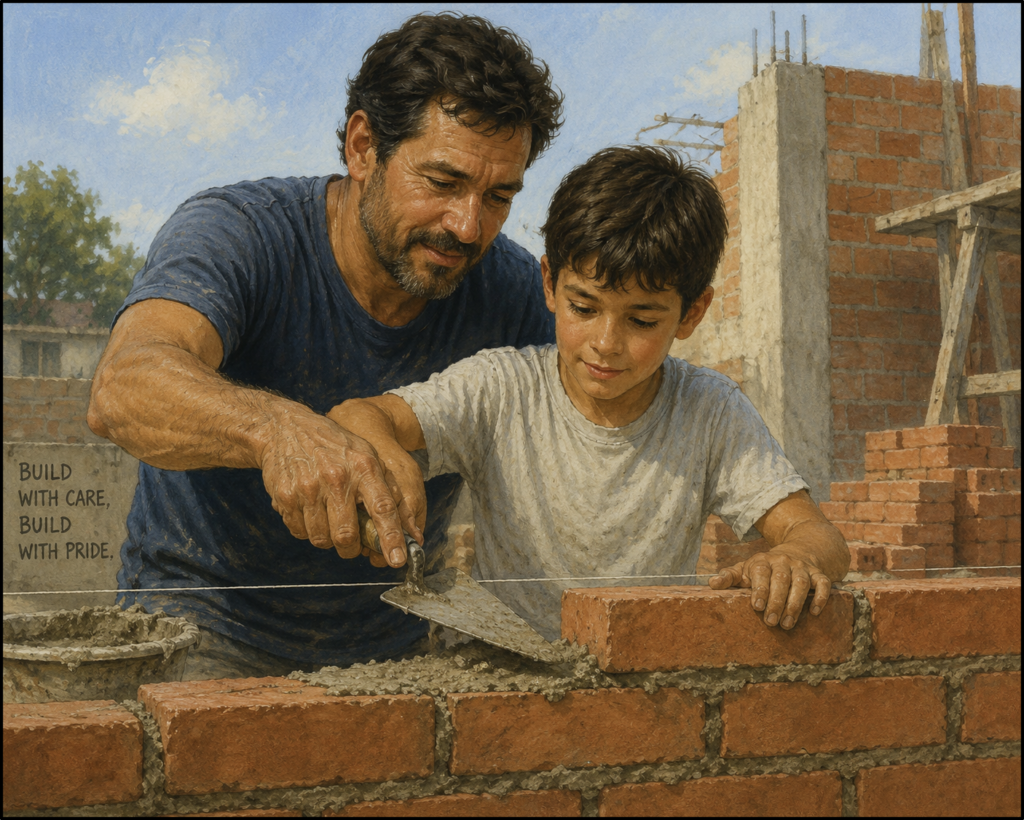
He showed me how each brick mattered in the wall, how every single one had to be set level so the whole structure would stand straight and strong. The cement was what held it all together, binding loose bricks into a unified whole. My job, he said, was to spread a generous, even layer—not too much and not too little—so the brick would settle firmly into place.
Sometimes the Trowel moved smoothly, almost effortlessly. Other times it took a little work to get the right amount of cement, the right angle, the right touch. But every brick, every motion of the Trowel, contributed to something larger than itself. A wall is never built all at once. It is built one careful, intentional brick at a time.
I did not know it then, but that afternoon taught me more than how to lay a brick. It taught me what it means to build, to bind, and to bring things together. It taught me that strength comes from unity, and unity comes from the care we put into each connection. Years later, when I learned the Masonic meaning of the Trowel, I realized my father had already given me the beginning of that instruction—not in words, but in work.
The Trowel Inside the Lodge
In Freemasonry, the Trowel is one of the working tools of the Master Mason Degree. Operative masons use it to spread mortar and bind stones together, turning individual bricks into a unified, enduring structure. Speculative Masons take that same practical image and apply it to human behavior and character.
Just as mortar holds a wall together, the Trowel symbolizes the forces that bind people into a community. It reminds us that unity does not happen by accident. It is built intentionally through the way we treat one another.
Symbolically, the Trowel teaches:
Brotherly Love — spreading the cement that unites members into a supportive, caring fellowship.
Unity — binding individuals together despite differences in background, opinion, or experience.
Peace and Harmony — encouraging kindness, cooperation, and mutual respect, smoothing the rough edges that cause friction.
Service to Others — using our actions to strengthen society rather than divide it.
A familiar Masonic explanation puts it plainly: the Trowel spreads the cement of Brotherly Love and affection, joining people into a moral and ethical whole.
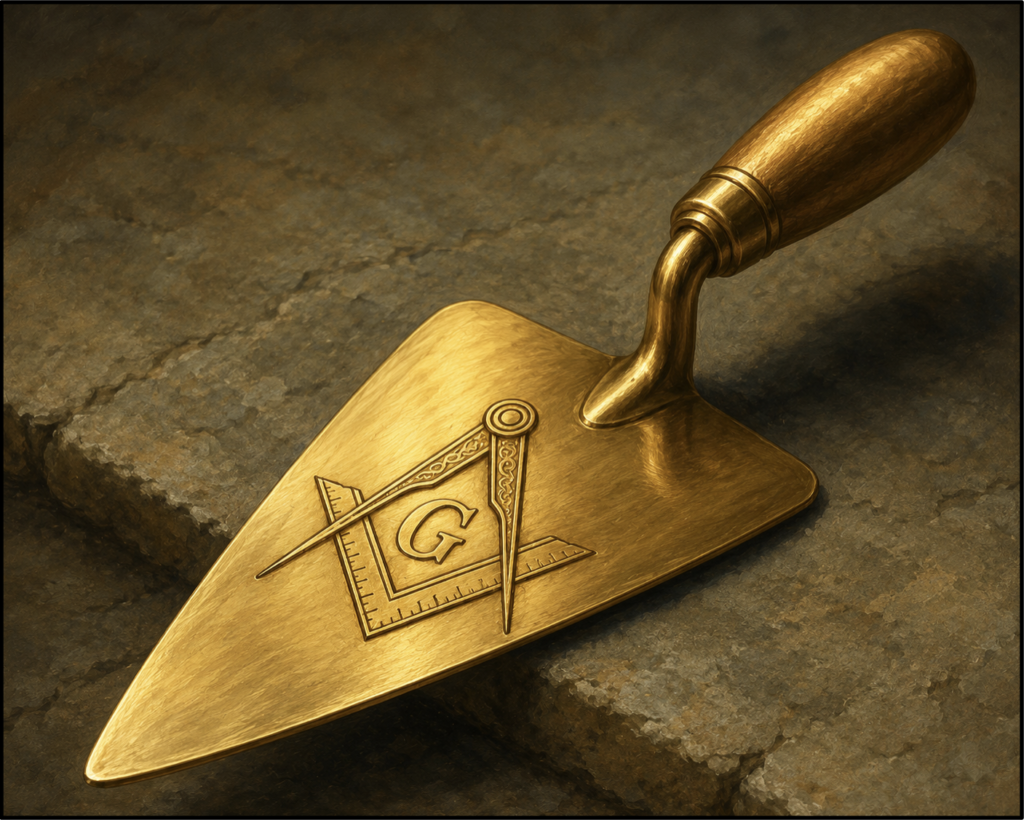
Inside the Lodge, this is more than a poetic phrase. It is a charge. The Trowel reminds Master Masons that their work is not only to build themselves, but to help build harmony among others. It is the tool that prevents separation, heals division, and strengthens the bonds that make a Lodge more than a room full of individuals.
The Work of Building Unity
If the Trowel teaches us anything, it is that unity does not happen on its own. A wall does not rise because the bricks wish to be together. It rises because someone takes the time to place each brick with care, spread the mortar evenly, and make sure the bond is strong. The same is true of human relationships.
Today’s world makes this work harder than ever. People are quick to divide themselves into groups, to defend their opinions, to assume the worst of others before they have heard the best. Social media rewards outrage more than understanding. News cycles thrive on conflict. Even small disagreements can turn into wide cracks if no one steps forward to mend them.
This is where the Trowel becomes more than a symbol. It becomes a discipline.
Some days the work goes smoothly. Conversations flow, people cooperate, and harmony seems easy. Other days, the Trowel drags. Misunderstandings pile up. Tempers flare. The mortar feels too thick or too thin, and nothing seems to set right.
But the lesson is the same: unity is built one careful act at a time.
A kind word. A patient response. A willingness to listen. A choice to mend rather than widen a crack.
These are the small motions of the Trowel in daily life. They may not seem like much in the moment, but they bind people together in ways that last.